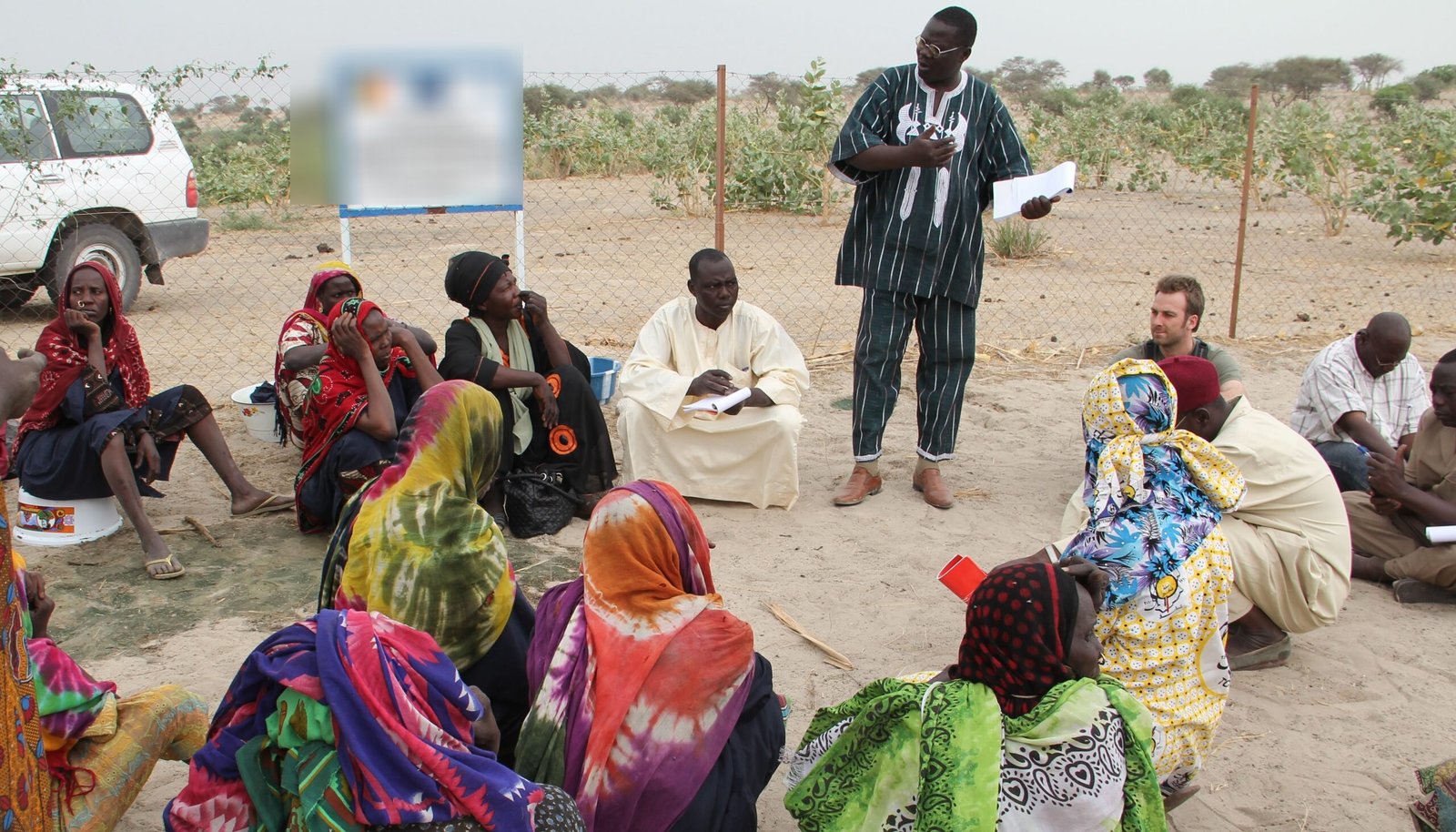
Our communities
The people behind every shipment.
From central Chad to the cocoa belt of Ivory Coast, every ingredient we sell traces back to a producer relationship we know by name.
A network, not a slogan
We will be honest about something most ingredient brands won’t say: the global “ethical sourcing” marketing language is, very often, marketing language. Real direct-from-cooperative supply chains are harder to build, slower to scale, and more expensive to maintain than buying from re-exporters in Antwerp or Rotterdam.
This page describes the real producer communities we work with, with the level of detail we can actually verify, in the regions we actually go to. We are deliberately not naming cooperatives whose official structures we cannot confirm, because that is exactly the kind of misleading content we have spent the last few months removing from this site.
Where we have a verified named partner, like the Guéra Women’s Cooperative in Chad, we name them. Where we work through producer networks without a single formal cooperative name we can publish, we say so. That is the difference between honest sourcing and marketing.
🇹🇩 Chad · Central Sahel
The Guéra Women’s Cooperative
Ingredients sourced: Chebe powder, Ambunu leaves
Our most established cooperative partnership. The Guéra region of central Chad is the historical homeland of the Chebe tradition, the centuries-old haircare practice of the Basara Arab women, whose waist-length hair is documented across academic and journalistic literature.
The women of this cooperative harvest, roast, and grind the ingredients of authentic Chebe powder using the methods their mothers and grandmothers taught them: Croton zambesicus seeds, Mahllaba Soubiane (cherry pit kernels), cloves, samour resin, and lavender stone scent. They also harvest and shade-dry Ambunu leaves (Ceratotheca sesamoides), the saponin-rich plant traditionally used to cleanse and detangle hair before applying Chebe.
Our partnership with Design Essentials
Since 2022, this same supply chain has supplied Chebe powder to McBride Research Laboratories, the company behind Design Essentials, the historic African-American haircare brand. In March 2023, Design Essentials produced and released a short documentary film, “Journey to Chad: The Origin of Chebe Powder”, on their official YouTube channel:
Beyond commerce, our partnership with Design Essentials has co-funded the construction of a drinking-water borehole in the producing community, supported the reconstruction of agricultural granaries, and contributed to multiple material and financial donations to producer households. Documented, not marketed.
🇧🇫 Burkina Faso · Sahelian belt
Women’s Shea cooperatives in Burkina Faso
Ingredient sourced: Raw, unrefined Shea butter
Burkina Faso is one of the world’s two largest Shea-producing countries, alongside Ghana, together they supply 60 to 75% of all Shea kernels traded internationally. According to the Food and Agriculture Organization, at least 646,000 Burkinabé households are involved in Shea collection. The country has more than a thousand registered women’s producer organisations.
We work with women’s cooperatives within this network. We are deliberately not publishing a single formal cooperative name here, because our sourcing relationships involve multiple producer groups in different regions, and naming any single one as “ours” would misrepresent the structure. What we can confirm: every Shea butter shipment we export is purchased directly from women’s producer groups, paid in full before leaving Burkina Faso.
The Burkinabé method
Because water is scarce in much of Burkina Faso, women here favour dry treatment or fermentation followed by boiling, a different processing tradition from neighbouring Ghana. The kernels are sun-dried, sometimes lightly fermented, then roasted and stone-ground before being kneaded by hand. The butter that emerges is yellow to ivory in colour, naturally fragrant, and rich in vitamins (A, E, F) and unsaponifiables. This is what real “unrefined” means: a method, not a marketing claim.
In West Africa, Shea butter is called or des femmes, the gold of women. The FAO has documented Shea cooperatives as among the few formal social structures providing rural Burkinabé women with independent income, skill-building, and a space to gather, learn, and speak openly. Buying Shea butter from us means contributing to this network rather than to a European processing chain that captures most of the value before the butter reaches you.
🇹🇩 Lake Chad · Kanembu women
The Kanembu women of Lake Chad
Ingredient sourced: Wild-harvested spirulina (dihé)
In Kanembu tradition, only women are allowed to enter the harvest waters of the natural alkaline ponds around Lake Chad. Men are formally excluded from this part of the work. Every dawn, the women wade into the shallow ponds with baskets and sieves, skimming the floating blue-green biomass off the surface of the water, the local name for it is dihé.
UNESCO has documented this work in detail at the village of Artomossi, in the Iserom canton of the Kanem and Lake provinces, where roughly 200 women form the core of the harvest. Lake Kossorom alone produces about 40 tonnes per year, with total Chadian production around 250 tonnes, making these communities among the highest-volume traditional spirulina producers in the world.
This ecosystem is fragile. Lake Chad has lost about 90% of its surface since the 1960s due to climate change and population pressure. The natural ponds where dihé grows are vulnerable. The traditional knowledge held by Kanembu women is at risk of disappearing in a single generation if these communities are cut out of the value chain. By buying through us, you buy from women who still hold this knowledge, not from an industrial pond on another continent.
🇨🇮 Côte d’Ivoire · Cocoa belt
Cocoa cooperatives in Côte d’Ivoire
Ingredients sourced: Cocoa powder, raw cocoa butter
Côte d’Ivoire produces roughly 40 to 45% of the world’s cocoa, supplying every major chocolate manufacturer on Earth. About 2.0 to 2.25 million tonnes of cocoa beans leave the country annually, accounting for 40% of national export income. Yet despite this dominance, Ivorian farmers historically capture only 5 to 7% of the global value of chocolate. Direct sourcing from cooperatives is one of the few ways to shift that imbalance.
Unlike palm oil or soy, Ivorian cocoa is grown almost entirely on family-owned smallholdings, typically a few hectares per household. The country’s cocoa supply chain is built on hundreds of thousands of small farms, organised into cooperatives that pool harvests, share equipment, and negotiate collectively with buyers. The cooperative model has historical roots in the post-independence Groupements à Vocation Coopérative (GVC) structure, which evolved into today’s formal cooperatives.
Our cocoa partners are part of this cooperative network, in the producing regions of southern and western Côte d’Ivoire. Both our cocoa powder and our raw cocoa butter come from this same supply chain. By buying directly through the cooperative network rather than through a European processor, we ensure that more of the value flows back to the farmers who actually grow the trees.
🇧🇯 Benin · Our home base
Local sourcing in Benin
Ingredients sourced: Moringa, plus the Pan-African network for hibiscus and other West African botanicals
Essential Care Plus is headquartered in Cotonou, Benin. Our founder Zinsou Gislain is Beninese, raised in the agricultural north of the country. Several of our ingredients are sourced locally, including our Moringa leaf powder, grown in the southern Guineo-Congolese phytodistricts of Benin where Moringa is a fully integrated agroforestry crop, used for food and medicine across at least nine documented socio-cultural groups (Fon, Waci, Xwla, Sahouè, Djerma, Kotafon, Aïzo, Goun, Yoruba), per ethnobotanical research published in Springer and Ethnobotany Research and Applications.
Cotonou is also the operational hub for our broader West African producer network. Hibiscus, cloves, and several other ingredients are sourced through this network, hand-selected, and consolidated for export from our base. This is the practical advantage of being headquartered in the producer region rather than reselling from Europe or North America: shorter supply chains, fewer intermediaries, and direct accountability to the producers we work with.
How your purchase contributes
A portion of every order is set aside to fund concrete actions in the producing communities we work with. The work is visible on the ground, not in marketing reports.
- 💧 Drinking-water boreholes in villages without reliable access (one already co-funded with Design Essentials in our Chad supply region).
- 🏫 Renovation of schools in partner producer communities.
- ❤️ Medical care for community members identified by traditional chiefs as needing help with serious health conditions.
- 📚 School enrollment awareness campaigns to reduce child labour and keep children in education.
- 🌾 Reconstruction of agricultural granaries, supporting harvest preservation and food security.
Buying from Essential Care Plus means standing alongside these communities, wherever you are in the world. It means encouraging them. And, most importantly, it means contributing to real, measurable improvements in their daily lives.
Stand with the cooperatives.
Every order supports producers, schools, water access, and health in the communities we work with.