




The original spirulina, before the industry
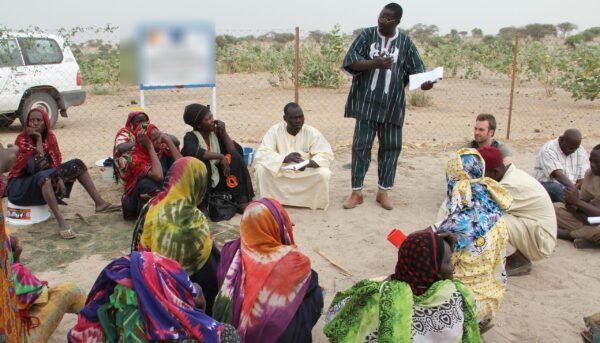
Long before spirulina became a cultivated commodity in tanks across Hawaii, India, and China, Kanembu women in the Lake Chad basin were harvesting the same algae from the surface of brackish lakes, drying it on sandy shores, and feeding it to their families. They have done so for at least four centuries. The Chadian name for this spirulina is Dihé.
What you receive in every Essential Care Plus shipment is that exact Dihé, harvested the same way it has always been harvested, dried in the sun, packaged with the cooperative name, harvest date, and lot ID documented.
Why Dihé is different from commodity spirulina
Most spirulina on the global market is Arthrospira platensis grown in controlled tanks, harvested mechanically, then spray-dried at high temperatures. The process is efficient. It also degrades the most fragile bioactive compounds. Dihé takes the opposite path on every step.
| Attribute | Commodity spirulina | Dihé (Lake Chad) |
|---|---|---|
| Growth environment | Controlled tanks, monoculture | Open lake, natural ecosystem, multi-strain |
| Harvesting | Mechanical filtration | Hand-skimmed by Kanembu women, 4 to 8 kg per day per harvester |
| Drying method | Spray-dried at 150 to 200°C | Sun-dried on sandy shores at 35 to 45°C |
| Phycocyanin preservation | Partially degraded by heat | Preserved by low-temperature sun drying |
| Beta-carotene content | Standard cultivated levels | Reported at higher concentrations in published studies on wild Lake Chad spirulina |
| Provenance | Industrial farms | Lake Bol region, Kanem, Chad |
| Cultural status | None | Slow Food Ark of Taste presidium |
For supplement and food formulators, this matters in two ways. The phycocyanin content (the vivid blue pigment prized by formulators) is the most fragile compound in spirulina and the first to degrade under industrial drying. Sun-dried Dihé retains substantially more of it. For cosmetic formulators, the phycocyanin density is the reason Dihé commands premium pricing in serum and mask formulations.
How Kanembu women harvest Dihé
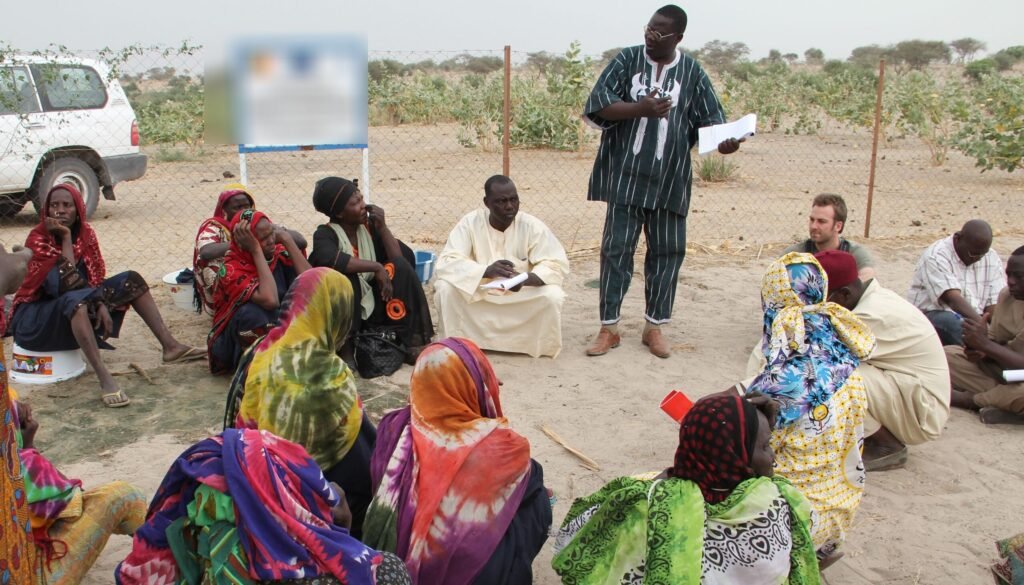
The harvest takes place on the shallow brackish lakes of the Kanem region, primarily around Lake Bol. Only women harvest Dihé. According to Kanembu tradition, men entering the water would make the lake barren, so the practice has remained exclusively female for centuries.
- The women skim the floating algal mat from the lake surface and pour it into baskets or directly into jars.
- The biomass is filtered through cloth and spread on the sandy shore to begin sun drying.
- Once partially dried, the semi-solid Dihé is cut into small squares, then taken to the village mats for final drying.
- A single Kanembu woman harvests typically four to eight kilograms per day during the high season.
- The Kanem region produces approximately 250 dry tons annually, generating income for several hundred women across the cooperative network.
Sourcing transparency
Every Essential Care Plus shipment of Dihé ships with:
- Lot certificate with harvest date, harvest location (Lake Bol or named secondary lake), batch ID, moisture content, and packaging date.
- Named cooperative contact, available for independent verification by your quality team.
- Phytosanitary certificate for international shipments, required for customs clearance in the EU, UK, US, Canada, and Australia.
- Photo evidence at source, taken at the harvest site within the production window of your order.
- DHL Express tracking, four to seven business days to most destinations from our Cotonou warehouse.
Recognized by Slow Food, supported by the FAO
Dihé has been recognized by the Slow Food Foundation as a presidium in its Ark of Taste, a living catalogue of traditional foods at risk of disappearing. The Food and Agriculture Organization launched a program in 2007 to support Kanembu women in improving harvest hygiene and international packaging standards.
The Lake Chad strain also holds a particular place in the scientific record: much of the early research that introduced spirulina to Western nutritional science was conducted on samples collected from this basin, not on tank-grown biomass.
Who buys our Dihé wholesale
- Supplement formulators producing premium capsule or powder lines that need verifiable single-origin sourcing to differentiate from commodity competition.
- Food and beverage brands incorporating spirulina into smoothie powders, energy bars, or functional foods that value bioactive density over price.
- Cosmetic formulators developing serums, masks, or scalp treatments that prize the phycocyanin density in Dihé for color intensity and formulation performance.
- Research institutions and universities requiring documented wild-harvested spirulina for nutritional or biochemical research.
Frequently asked questions
Why is Dihé more expensive than commodity spirulina ?
You are paying for three things commodity producers cannot deliver. First, wild-harvested algae from a multi-strain natural ecosystem. Second, sun drying at low temperature, which preserves heat-sensitive compounds (notably phycocyanin) that industrial spray drying degrades. Third, a complete provenance chain back to a named Kanembu cooperative on Lake Bol, with documentation your formulation chemists and regulatory team can verify independently.
Can I get a current nutritional analysis report ?
Yes. We send the most recent third-party laboratory analysis on request (protein content, beta-carotene, phycocyanin, iron, ash, moisture, microbiological profile, heavy metals). Submit the inquiry form on our Wholesale Program page and we reply within a few hours, 24 hours at most, with the current lot analysis.
What is the harvest cycle and lead time ?
The Kanembu Dihé harvest runs year-round, with peak production during the dry season (November to April). We maintain stock buffer in our Cotonou warehouse to ship orders within four to seven business days regardless of harvest season. For orders above 50 kg, lead time may extend to ten business days during peak demand.
Is the spirulina certified organic ?
No. Dihé is not certified organic. It is harvested from an open lake ecosystem with no fertilizers and no synthetic inputs, and we can provide documentation of the production environment on request, but we do not hold organic certification and we will not claim it. Neither do the cooperatives we buy from. If your labelling requires certified organic input, tell us at the quote stage.
What is the minimum order ?
Five kilograms per ingredient, with no upper limit. Five kilograms is deliberately low so brands can test the ingredient in a real formulation before committing to volume. Pricing improves at 100 kg and again at 500 kg; see our payment policy for the tier structure.
We ship from Africa. If you change your mind, the return travels the same route, so return shipping is at your cost and starts around $125 for a 1 kg parcel. If an item arrives damaged, defective or wrong, email us within 48 hours with photos: we always find an arrangement with you, and no return shipment is needed. See our return policy.
Reviews
There are no reviews yet.