Botanical specifications
- Botanical name: Hibiscus sabdariffa
- Plant family: Malvaceae
- Plant part used: Calyx (whole, sun-dried)
- Origin: Sahel region (Senegal, Chad)
- Certification status: Not certified organic. Growing and drying practices documented per lot on request.
Direct from West Africa · The bissap tradition
Why our Hibiscus comes from the Sahel
Around the world, hibiscus tea has many names: bissap in Senegal, Burkina Faso and Côte d’Ivoire, zobo in Nigeria, sobolo in Ghana, karkadé in Egypt and Sudan, agua de Jamaica in Mexico. But all of these traditions converge on the same plant, Hibiscus sabdariffa, also called Roselle, and almost all of them trace back to Africa.
We source our hibiscus calyces from West African producer regions, where the plant has been cultivated for centuries and where the bissap tradition is part of everyday life. Same continent we live on, same supply chain partners as our other products.
The drink of pharaohs and the national drink of Senegal
Hibiscus sabdariffa is one of the oldest cultivated plants in human history. Botanical and archaeological evidence places its domestication around 4000 BCE in what is now Sudan. From there it spread across the African continent, then onwards to Egypt, the Middle East, and through colonial trade to the Caribbean, Mexico, and Southeast Asia.
In ancient Egypt, the calyces were brewed into a deep red drink called karkadé, sometimes referred to as the “Tea of the Pharaohs”, reserved for royalty and used in wedding ceremonies. The same calyces were used to dye ceremonial fabrics in shades of crimson, a practice that spread to Sudan and beyond.
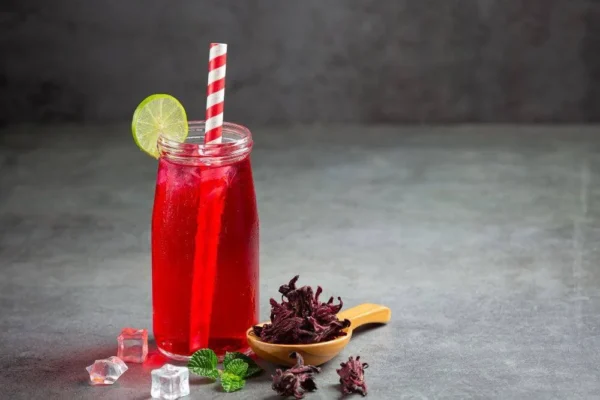
In West Africa, the drink became bissap: a tart, ruby-red infusion sweetened lightly and often flavoured with mint, ginger, or orange blossom. Bissap is widely described as the national drink of Senegal, but the tradition extends across the entire Sahel, from Senegal east through Mali, Burkina Faso, Niger, and Chad. Every household has its recipe.
How it grows in the Sahel
Hibiscus sabdariffa is a hardy, drought-tolerant plant that thrives in the very conditions much of the Sahel offers: hot days, light rainfall, sandy soils. The plant is sown at the start of the rainy season (typically May-June in West Africa), grows through the summer, and produces its fleshy red calyces around the flowers in autumn (September-November).
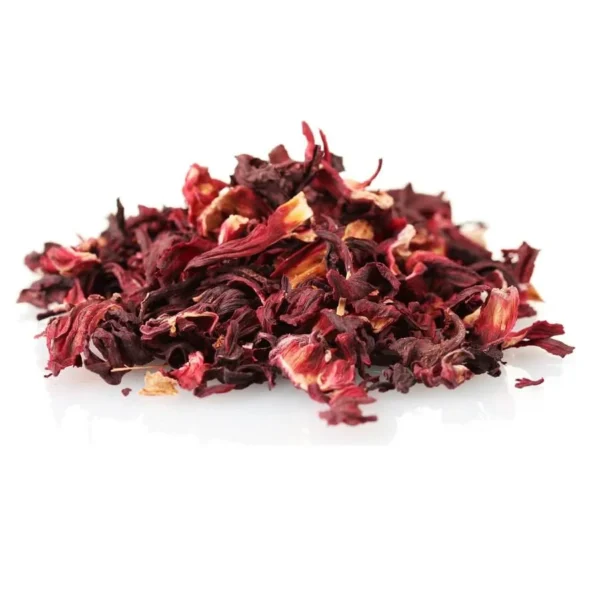
The harvest is largely manual. The calyces, the fleshy, cup-shaped structures that surround the seed pod after the flower has dropped, are picked by hand at full maturity, separated from the seed pod, then sun-dried on mats or racks. This is exactly how it has been done for centuries. The dried calyces are what you receive: deeply red-purple, faintly tart in aroma, ready to infuse.
Our hibiscus is sourced from West African producer regions where this method is still standard. There is no industrial alternative: hibiscus calyces are too delicate to mechanise the harvest economically, so the work remains in the hands of small producers, often women and family farms.
The color and character of the calyx
The calyces owe their deep ruby color to anthocyanins, the same natural pigments found in berries and red grapes. Combined with the plant’s natural organic acids (mainly hibiscic acid), they give bissap its signature tartness, its vivid crimson pour, and its remarkable versatility as a natural food colorant.
None of this is folklore. It is the chemistry behind a drink that West African households have perfected for generations, the reason bissap has been the celebration drink of the Sahel for centuries.
What real West African hibiscus gives you
- Authentic Hibiscus sabdariffa calyces from West African producer regions, the homeland of the bissap tradition.
- Hand-harvested at full maturity, sun-dried on mats by smallholder farmers, not industrial processing.
- Small-cut format for fast, complete infusion, the calyces release their colour and flavour within minutes of contact with hot water.
- Deep ruby color and bright natural tartness, the vivid character that makes hibiscus a favorite of tea blenders and beverage makers.
- Versatile, hot tea, cold infusion (bissap), syrups, jams, natural food colouring, even mocktails and cocktails.
- Documented per lot, certificate of analysis with every order and a phytosanitary certificate for every export shipment, as required by international plant-product regulation.
- Direct purchasing from producer regions, with each order contributing to community development work in the areas we source from.
We ship from Africa. If you change your mind, the return travels the same route, so return shipping is at your cost and starts around $125 for a 1 kg parcel. If an item arrives damaged, defective or wrong, email us within 48 hours with photos: we always find an arrangement with you, and no return shipment is needed. See our return policy.
Reviews
There are no reviews yet.