Botanical specifications
- Botanical name: Theobroma cacao
- Plant family: Malvaceae
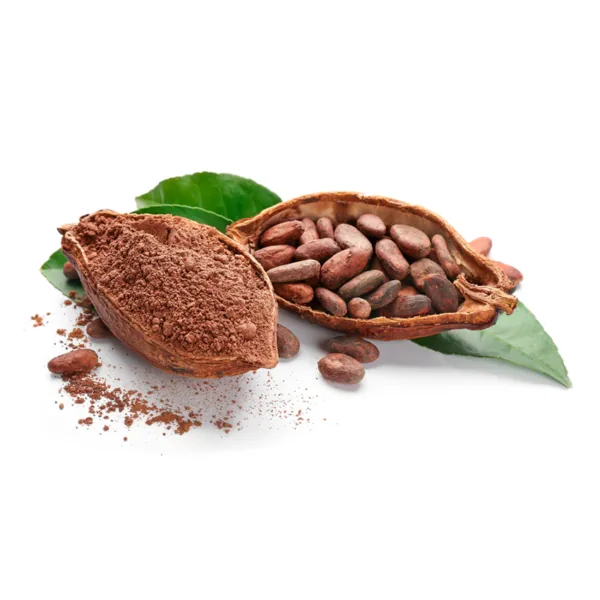
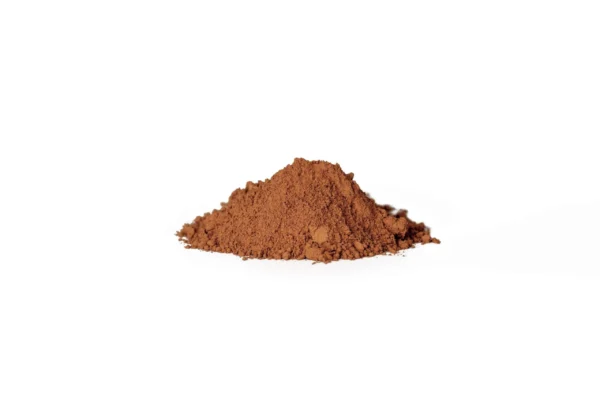
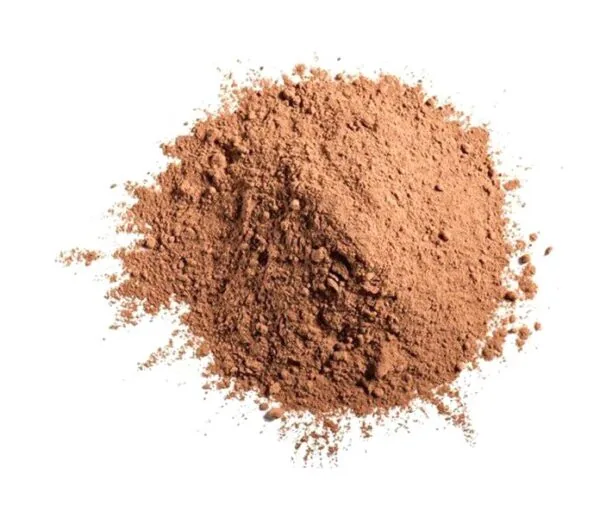
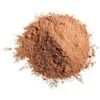
- Plant part used: Defatted cocoa powder (fermented, sun-dried)
- Process: Natural process, not Dutch-process alkalized
- Origin: Côte d’Ivoire, Bondoukou
- Certification status: Not certified organic. Cooperative and lot documentation available on request.
- Single-origin: One country, one region, Bondoukou in eastern Côte d’Ivoire. Not a multi-continent commodity blend.
- Natural process: No Dutch-process alkalization. The powder keeps the acidity, aroma and colour of the bean rather than the flattened profile of alkalized cocoa.
- Rich flavour: The balanced, full-bodied Forastero profile that the global confectionery industry is built on. Strong without bitterness, with subtle fruity and earthy notes.
- Versatile: Baking, hot chocolate, smoothies, savoury moles and beverage formulation.
- Direct from cooperatives: Purchased from farmer cooperatives at origin, not from a re-exporter in Antwerp or Amsterdam.
- Documented per lot: Certificate of analysis on request, and a phytosanitary certificate with every export shipment.
Direct from Ivory Coast · The world’s cocoa capital
Why our Cocoa Powder comes from Côte d’Ivoire
If you have ever eaten chocolate, the odds are very high that the cocoa came from Côte d’Ivoire. The country produces roughly 40-45% of the world’s cocoa, supplying every major chocolate manufacturer on Earth, from Mars and Hershey to Nestlé and the European confectionary industry.
And yet, despite producing nearly half the world’s cocoa, Ivorian farmers see only 5-7% of the global value of chocolate. We are working to be part of the answer to that imbalance.
The story of how a country became the world’s cocoa capital
Cacao (Theobroma cacao) is not native to Côte d’Ivoire. It was introduced in the late 19th century, when French agronomist Tautain set up the first experimental plantation near Grand-Bassam, on the Ivorian coast. The tropical climate, fertile forest soils, and dependable wet/dry seasons turned out to be near-perfect for cacao.
By 1939, Côte d’Ivoire had risen to become the world’s second-largest producer, behind only Ghana. Then in 1977, the country overtook Ghana to become the global leader, a position it has held continuously for over four decades. Today, the country produces between 2.0 and 2.25 million tonnes of cocoa beans per year, with cocoa accounting for about 40% of all national export income.
Smallholder cooperatives, not industrial plantations
Unlike many large agricultural commodities, Ivorian cocoa is grown almost entirely on family-owned smallholdings, typically a few hectares per household. There are no plantations of the kind you see in palm oil or soy. The country’s cocoa supply chain is built on hundreds of thousands of small farms, organised into cooperatives that pool harvests, share equipment, and negotiate collectively with buyers.
The cooperative system in Côte d’Ivoire has historical roots: cocoa farmers first formed grassroots groupings (in French, Groupements à Vocation Coopérative) to pool produce for sale and increase their bargaining power. Today these structures have evolved into formal cooperatives, working with organisations like Rainforest Alliance for certification and with international processors for export. Our partners are part of this network, in the cocoa-producing regions of southern and western Côte d’Ivoire.
By sourcing directly from these cooperatives, paying the cooperative, not a re-exporter in Antwerp or Amsterdam, we ensure that a meaningfully larger share of the value reaches the people who actually grow the cocoa.
Why cocoa from Côte d’Ivoire tastes different
Cocoa is a terroir product. The same way wine from Burgundy tastes different from wine from Napa, cocoa from Côte d’Ivoire has a distinctive flavour profile shaped by the country’s soil, climate, and the predominant Forastero bean variety grown there.
Ivorian cocoa is known for its balanced, full-bodied chocolate flavour, strong but not bitter, with subtle fruity and earthy notes. Industrial chocolate brands rely on it precisely because of this balance: it is the workhorse cocoa of the global confectionary industry. Our cocoa powder retains those characteristics because we don’t over-process it. The beans are fermented, sun-dried, then ground and lightly defatted in the traditional way, no Dutch-process alkalization that strips flavour and aroma.
What real Ivorian cocoa powder gives you
- Single-origin from Côte d’Ivoire, the world’s largest cocoa producer, not a generic blend from multiple continents.
- From cooperative smallholders, not industrial plantations. Our supply chain ends at the farmer cooperative, not at a re-exporter in Europe.
- Natural-process, not Dutch-process, so the powder retains its natural flavonoid and theobromine content along with its full aroma.
- Versatile, baking, hot chocolate, smoothies, savoury moles, beverages. Behaves like the cocoa professional pastry chefs use.
- Phytosanitary certificate issued for every export shipment, as required by international food import regulation.
- A purchase that gives back. Each order contributes to community development work in our producer regions.
We ship from Africa. If you change your mind, the return travels the same route, so return shipping is at your cost and starts around $125 for a 1 kg parcel. If an item arrives damaged, defective or wrong, email us within 48 hours with photos: we always find an arrangement with you, and no return shipment is needed. See our return policy.
Reviews
There are no reviews yet.