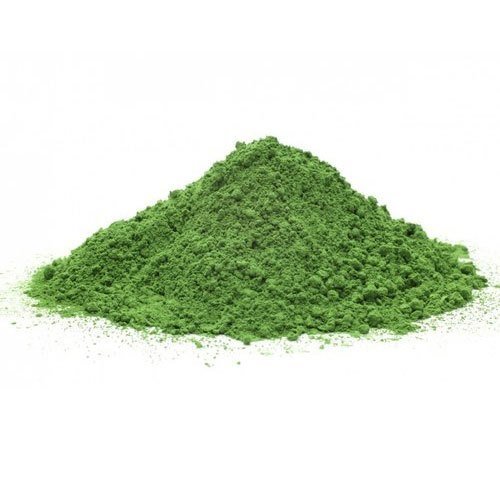
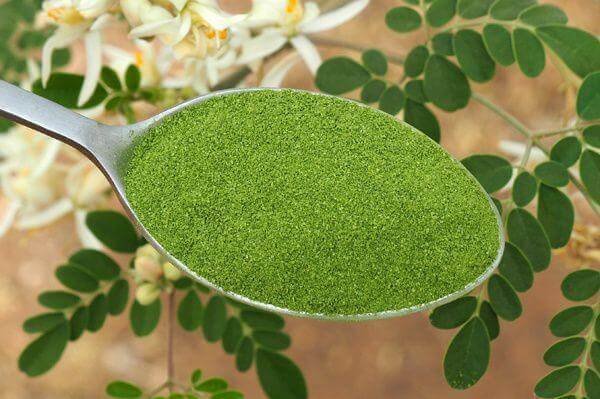
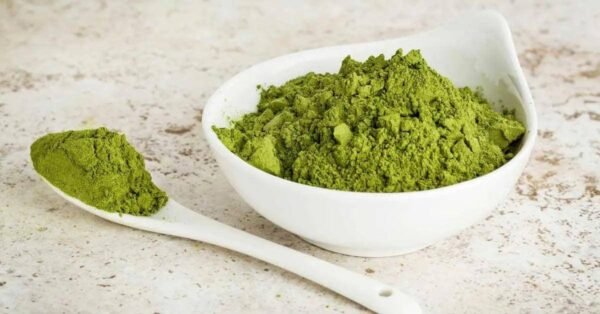
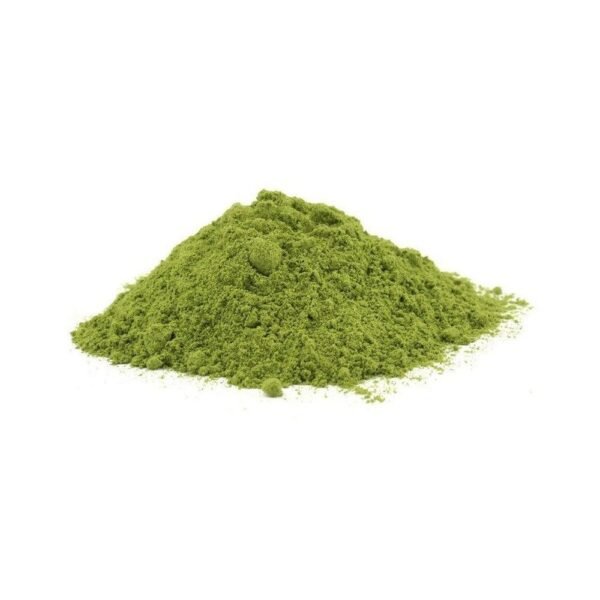
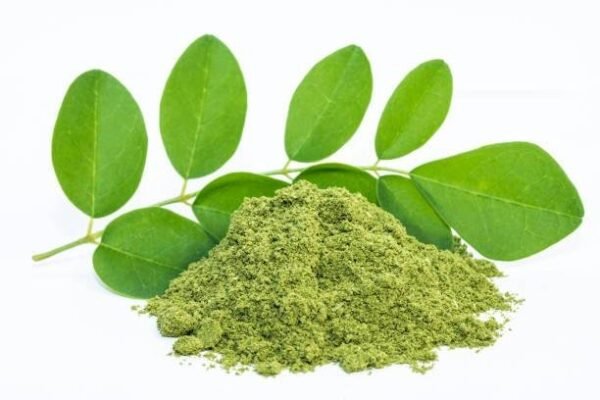
Botanical specifications
- Botanical name: Moringa oleifera
- Plant family: Moringaceae
- Plant part used: Leaf (shade-dried, food-grade)
- Origin: Southern Benin and Northern Ghana (Tamale corridor). Country of origin is stated per lot on the certificate of analysis.
- Certification status: Not certified organic. Cultivation and drying practices documented per lot on request.
Direct from West Africa · Benin and Northern Ghana
Where our Moringa comes from
Most Moringa powder sold internationally is grown in large monoculture farms in India or the Philippines, dried in industrial driers, and shipped halfway around the world. Ours is different. We source from two West African origins: smallholder farms in southern Benin, the country where Essential Care Plus is based, and the Tamale corridor in northern Ghana, a long-established Moringa growing region.
We do not import our Moringa from Asia and re-export it from Africa. It is West African Moringa, grown where we operate, dried under controlled conditions, and shipped from Cotonou via DHL Express. The country of origin of your specific lot is stated on the certificate of analysis that ships with every order.
Two origins, one standard
Benin and northern Ghana sit in the same climatic belt and share the same cultivation traditions, which is why we accept lots from both. What does not change between them is the standard: leaves are harvested from smallholder and agroforestry plots, shade-dried rather than oven-dried, and milled without additives.
Southern Benin supplies our core volume. Moringa here is grown by smallholder farmers and households who have integrated it into traditional agroforestry systems, planted around homesteads or between rows of maize, cassava and vegetables.
Northern Ghana (Tamale corridor) supplies additional volume for larger wholesale orders. It is one of West Africa’s most established Moringa regions, with mature producer networks and consistent leaf quality.
If your formulation or your labelling requires a single fixed country of origin, tell us at the quote stage and we will supply from one origin only.
The “Miracle Tree” in West African food culture
Moringa oleifera is sometimes called the Miracle Tree, the Drumstick Tree, or the Tree of Life. The tree is genuinely remarkable: leaves, pods, seeds, flowers and roots all have a place in West African food culture and daily life. Its leaves are naturally rich in vitamin C, potassium and iron, with a complete amino-acid profile rare in plant foods.
Although Moringa originated in northern India, it has been part of West African food traditions for centuries. In southern Benin, ethnobotanical surveys published in Springer and Ethnobotany Research and Applications have documented the deep integration of Moringa into the food cultures of at least nine major socio-cultural groups, including the Fon, Waci, Xwla, Sahouè, Djerma, Kotafon, Aïzo, Goun, and Yoruba.
This is not a borrowed tradition. It is a fully integrated one.
How it is grown
In southern Benin, Moringa is mostly cultivated by cuttings rather than seeds (over 90% of cultivation in the Guineo-Congolese phytodistricts uses this method, per IJAAR research). The cuttings are planted in rows, often around homesteads or integrated into mixed-crop fields. The trees grow fast, tolerate dry seasons, and produce harvestable leaves within months.
This kind of agroforestry-integrated cultivation is fundamentally different from monoculture industrial Moringa. The leaves we source are picked from trees that have grown alongside other crops, in soil that has not been depleted by single-crop agriculture, on plots managed by families rather than corporations.
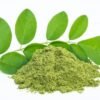
After harvest, the leaves are shade-dried rather than oven-dried, which preserves the chlorophyll, vitamin C, and other heat-sensitive nutrients. The dried leaves are then ground into the fine green powder you receive. The entire process happens in West Africa.
Why West African sourcing matters for Moringa specifically
Moringa is one of the few “superfoods” where the supply chain genuinely affects what is in the powder. Moringa leaves are highly perishable in their fresh form, and the longer they sit between harvest and drying, the more nutrients are lost. Industrial Moringa from Asia is typically dried in fuel-heated tunnel driers (faster, cheaper) which damages heat-sensitive vitamins. Sun-drying in equatorial conditions can also degrade nutrients via UV exposure.
Shade-dried Moringa, harvested regionally, processed quickly, and shipped from Cotonou rather than re-imported from another continent, retains a meaningfully better nutrient profile. This is something you can taste: real Moringa has a fresh, slightly grassy, almost matcha-like flavour. Industrial Moringa often tastes flat or musty, that is the loss of volatile compounds.
What real West African Moringa gives you
- West African sourcing. Grown in Benin and northern Ghana, dried in West Africa, shipped from Cotonou, not imported from Asia and re-exported.
- Origin stated per lot. The country of origin of your batch is documented on the certificate of analysis, not left vague.
- Shade-dried to preserve heat-sensitive vitamins (C, A, B-complex) and chlorophyll.
- Agroforestry-grown on smallholder farms, not industrial monoculture plantations.
- Complete amino-acid profile plus vitamins A, C, calcium, potassium, magnesium, iron, the nutritional density that earned Moringa its “Miracle Tree” name.
- Phytosanitary certificate issued for every export shipment, as required by international plant-product regulation.
- A purchase that gives back. Each order contributes to community development work in our partner regions across West Africa.
We ship from Africa. If you change your mind, the return travels the same route, so return shipping is at your cost and starts around $125 for a 1 kg parcel. If an item arrives damaged, defective or wrong, email us within 48 hours with photos: we always find an arrangement with you, and no return shipment is needed. See our return policy.
Reviews
There are no reviews yet.